
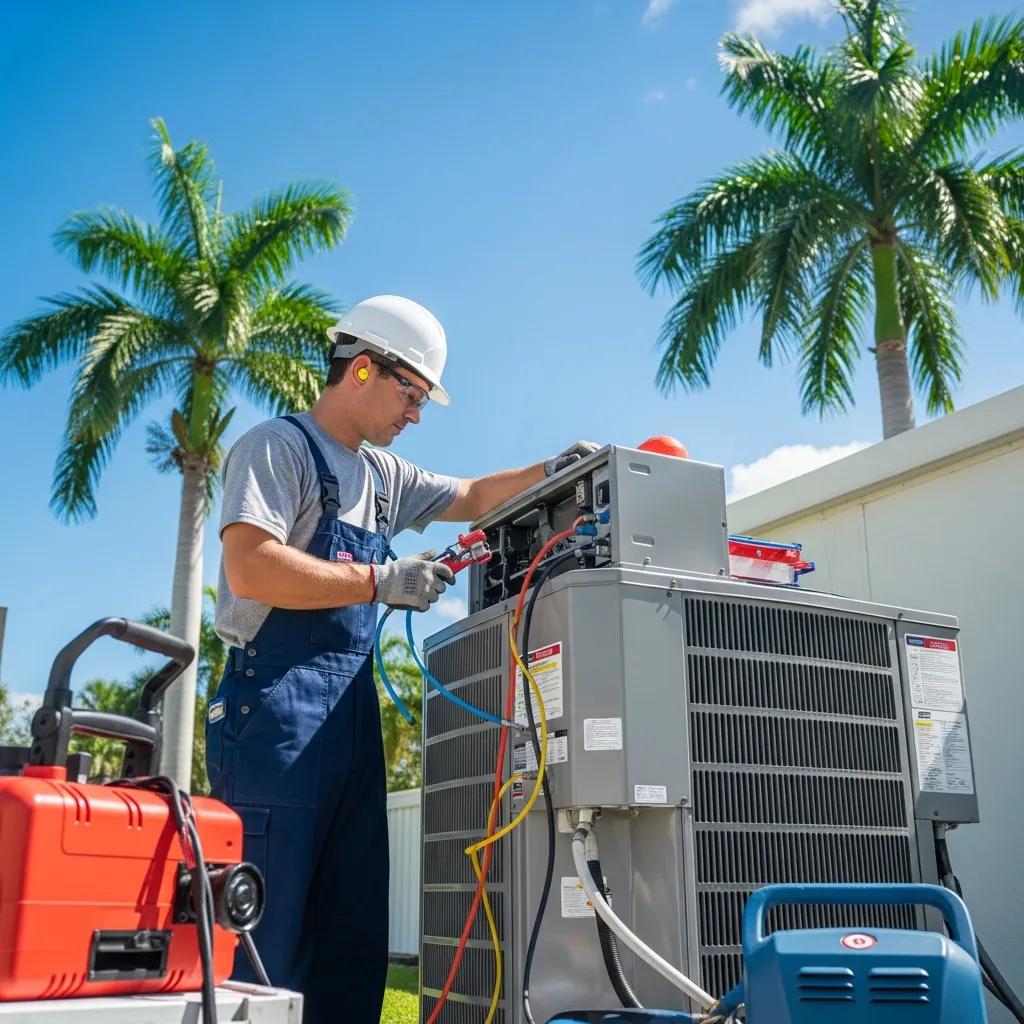
Routine HVAC‑R service is the most reliable way to keep air conditioning, refrigeration, and indoor‑air systems running efficiently in South Florida’s demanding climate. This guide lays out recommended service cadences for homes, commercial buildings, and refrigeration equipment, and explains how preventive maintenance cuts breakdowns, saves energy, and preserves warranty coverage. High humidity, long runtimes, and refrigerant stress are common causes of unexpected failures—here you’ll find clear schedules, component‑level tasks, and seasonal adjustments tailored to the region.
We cover baseline visit frequencies, the difference between annual and bi‑annual service, the inspections and cleaning a professional will perform, warning signs that need immediate attention, and how maintenance plans keep you on track. Practical examples, checklists, and local context make it simple to turn these recommendations into a maintenance calendar for your property. If you prefer local help, Frascona HVAC‑R is a South Florida contractor experienced in residential and commercial HVAC‑R, refrigeration, indoor air quality, and 24/7 emergency response.
Why Is Regular HVAC‑R Service Essential in South Florida’s Climate?
South Florida’s combination of heat, humidity, and coastal exposure speeds component wear and reduces system efficiency. Regular service removes moisture‑driven debris, finds refrigerant leaks early, and keeps airflow and controls tuned so systems meet design performance. Preventive work also reduces humidity‑related indoor‑air issues like mold and higher allergen levels, which affect health and comfort. Below we explain how targeted maintenance extends equipment life and prevents costly failures, then quantify typical energy gains from keeping systems maintained.
Because systems here run longer and face salt‑air corrosion more often than in temperate regions, coastal properties need extra attention—technicians commonly prioritize corrosion checks and protective measures to avoid premature failures. That local difference is why planning maintenance proactively matters in South Florida.
Frascona HVAC‑R uses local experience to inform these recommendations: as a South Florida contractor offering residential and commercial services, refrigeration support, indoor‑air work, and round‑the‑clock response, their team understands how humidity and runtime change service priorities. That perspective supports the practical guidance below and makes it easier to implement a schedule that fits your property.
How Does Regular Maintenance Extend HVAC System Lifespan and Prevent Breakdowns?
Regular service addresses the mechanical and chemical issues that lead to failure: friction, contamination, refrigerant imbalance, and electrical stress. Technicians lubricate moving parts, tighten electrical connections, verify controls, and catch small refrigerant leaks before they grow—reducing strain on compressors and motors. Cleaning evaporator and condenser coils restores heat transfer, which shortens run times and lowers thermal stress on components. Together, these actions reduce emergency calls and can extend the useful life of major parts by years versus neglected equipment.
Routine service also helps preserve warranty coverage, since many manufacturers require documented maintenance. A consistent service log supports warranty claims and helps owners plan phased replacements. The next section quantifies typical efficiency gains you can expect after routine maintenance.
What Energy Efficiency Gains Can You Expect from Routine HVAC‑R Service?
A typical preventive visit often yields a 5–15% improvement in system efficiency through filter changes, coil cleaning, refrigerant charge correction, and thermostat calibration. Clean coils and the correct refrigerant charge reduce compressor run time and improve cooling capacity, lowering kWh use during peak months. Replacing filters and correcting airflow reduces blower energy and helps spaces recover temperature faster after door openings or heavy loads. Exact savings depend on system age and condition, but industry data consistently show preventive maintenance reduces operating costs and improves temperature control.
Small, repeatable tasks add up: a clean coil has an immediate effect on heat transfer, and proper charging plus calibrated controls sustain that efficiency—reducing thermal cycling and component stress and lowering the chance of mid‑season failures. That performance improvement informs the scheduling guidance in the next section.
How Often Should You Schedule HVAC‑R Service? Recommended Frequency Explained
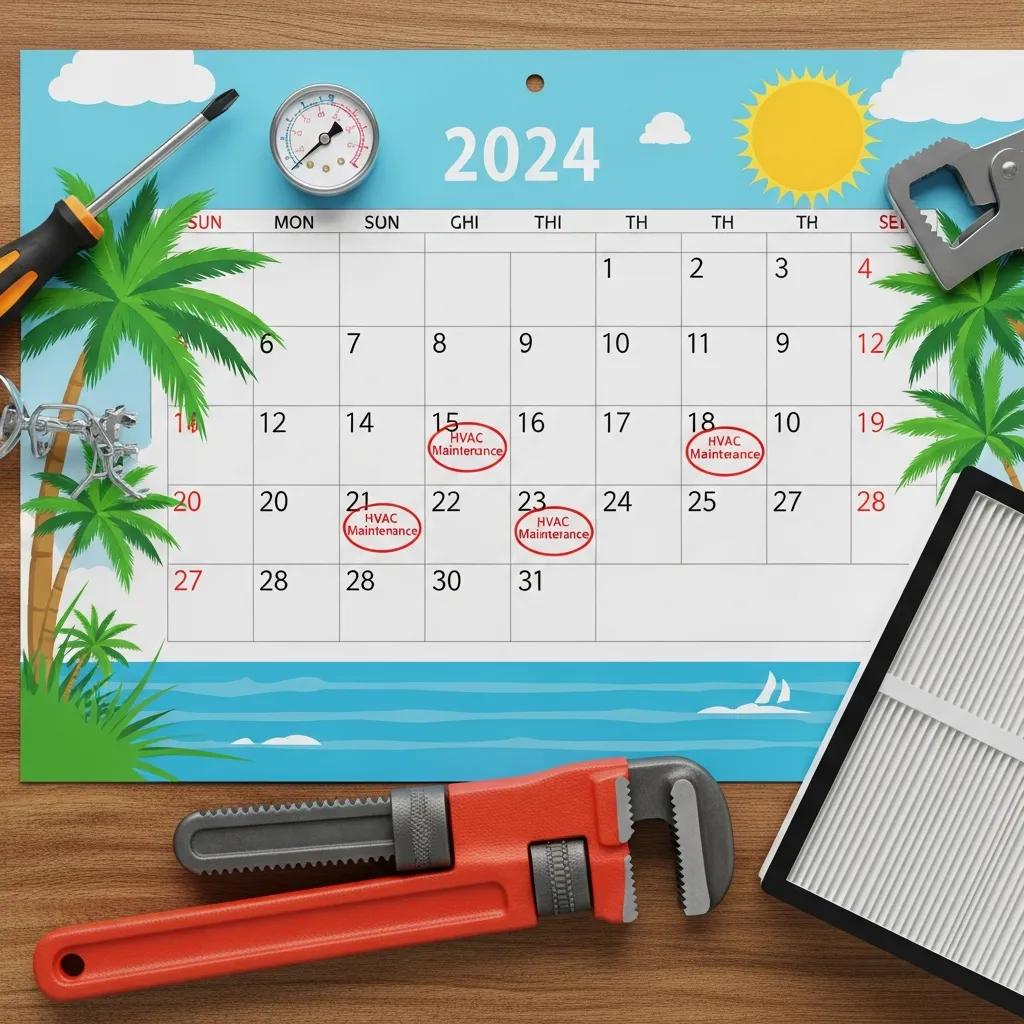
Most residential central AC systems should have at least one professional service visit per year; in South Florida, heavy‑use or older systems often justify bi‑annual visits. Refrigeration—walk‑ins, coolers, and ice machines—typically needs more frequent checks: quarterly to bi‑annual depending on workload and food‑safety rules. Use these baseline cadences and increase frequency for high runtime, heavy occupancy, or coastal exposure. The table below summarizes recommended frequencies and the typical tasks technicians perform at each visit.
This table helps owners plan a maintenance calendar tied to system criticality. After the table we explain how to choose between annual and bi‑annual cadences and what influences that decision.
| System Type | Recommended Frequency | Typical Tasks |
|---|---|---|
| Residential central AC | Annual (minimum) — Bi‑annual for high‑use or older systems | Tune‑up, filter replacement, coil cleaning, refrigerant check, electrical inspection |
| Commercial HVAC (rooftop, split) | Bi‑annual (minimum) | Full diagnostics, belt/drive checks, airflow balancing, safety control tests |
| Walk‑in refrigeration / coolers | Quarterly to bi‑annual | Evaporator cleaning, condenser cleaning, temperature verification, door gasket inspection |
| Ice machines | Quarterly | Sanitation, evaporator cleaning, water filter check, capacity test |
| Indoor Air Quality systems (UV, ERV) | Annual — filters per manufacturer | Filter replacement, UV bulb check, sensor calibration |
Use this schedule as a practical baseline; the next section explains the difference between annual and bi‑annual maintenance so you can set the right cadence for your property.
What Is the Difference Between Annual and Bi‑Annual HVAC Maintenance?
An annual visit is a comprehensive pre‑season tune‑up: refrigerant verification, electrical safety checks, and coil cleaning ahead of heavy cooling demand—appropriate for average residential systems with moderate run times. Bi‑annual maintenance splits those tasks into a pre‑peak and a mid‑season visit so technicians can correct issues that appear under heavy use and confirm early fixes held. In South Florida, bi‑annual visits often include extra humidity‑related tasks—condensate drain service and more frequent filter rotation to reduce microbial growth risk. Choose a cadence based on runtime, system age, occupancy, and whether the equipment protects critical inventory or occupants.
High‑duty environments—restaurants, healthcare, or older equipment—benefit from bi‑annual or quarterly schedules to lower emergency risk and keep temperatures steady. The next subsection contrasts residential and commercial scheduling and highlights documentation differences.
How Do Residential and Commercial HVAC‑R Maintenance Schedules Differ?
Residential maintenance centers on comfort, efficiency, and preserving warranties, usually with annual or bi‑annual visits. Commercial schedules prioritize uptime, regulatory compliance, and documented service records, with bi‑annual to quarterly cadences. Contracts often include preventive inspections, logbook entries, and performance testing (airflow balancing, temperature mapping) to meet health and safety codes. Commercial equipment is larger and more complex—rooftop units and industrial refrigeration require vendor‑specific procedures and certified technicians.
Because commercial systems affect business continuity, maintenance plans for those clients commonly add priority response, scheduled preventive visits, and parts management to minimize downtime. Understanding these differences helps owners pick the service level and records that match their operational risk.
What Does a Professional HVAC‑R Service Include? Key Maintenance Tasks and Inspections
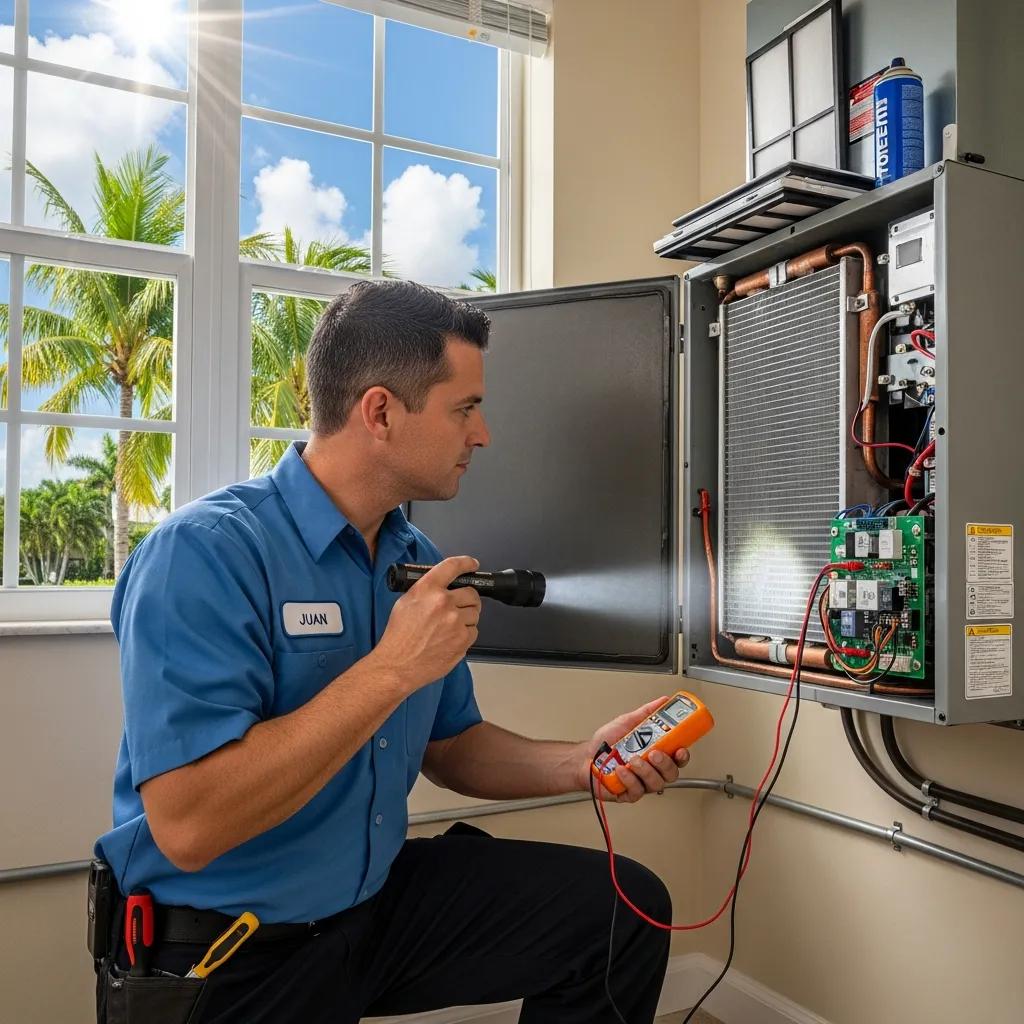
A professional HVAC‑R service combines inspection, diagnostics, cleaning, safety testing, and minor preventive repairs to restore design performance and catch problems early. Technicians check electrical systems, measure refrigerant pressures, test airflow, and visually inspect mechanical parts to spot wear and failure precursors. Cleaning targets coils, condensate pans, and drains to protect efficiency and indoor air quality, while controls and thermostats are calibrated to prevent unnecessary runtime. The table below links common components to the typical task and the expected benefit.
| Component | Inspection / Task | Expected Outcome |
|---|---|---|
| Evaporator coil | Clean and inspect for corrosion or blockages | Restored heat transfer and improved cooling capacity |
| Condenser coil | Clean fins and remove debris | Better condenser performance and reduced compressor load |
| Refrigerant circuit | Measure pressures and perform leak checks | Correct charge, lower energy use, reduced compressor stress |
| Electrical system | Tighten connections; test capacitors and contactors | Lower failure risk and safer operation |
| Air filter & airflow | Replace filters; measure static pressure | Improved airflow and comfort; lower blower energy |
This breakdown shows how individual tasks deliver measurable performance gains and lower failure risk. The following sections describe diagnostics and common cleaning and preventive repairs in more detail.
Which Components Are Inspected and Diagnosed During HVAC‑R Service?
Technicians examine compressors, evaporator and condenser coils, blower and fan assemblies, refrigerant lines, expansion devices, electrical panels, contactors, capacitors, and thermostats to diagnose issues. Each check serves a purpose: compressors are evaluated for signs of wear, coils for fouling that reduces efficiency, and electrical tests reveal failing capacitors or hot connections that can cause sudden shutdowns. Refrigerant leak detection uses electronic sensors or dye methods as appropriate so leaks can be located and repaired before capacity loss escalates. Those diagnostics determine whether immediate repairs are needed or if monitoring and small adjustments will keep the system reliable.
What Cleaning and Preventative Repairs Are Performed in Routine Maintenance?
Routine work typically includes coil cleaning with approved agents, condensate drain clearing and treatment, filter replacement, lubrication of motors and bearings, belt inspection and tensioning, and tightening or replacing electrical parts as needed. Preventive repairs may include replacing worn gaskets, servicing dampers and actuators, and topping off refrigerant when allowed by manufacturer specifications. These actions restore heat transfer, maintain airflow, and prevent water intrusion or microbial growth in pans and ducts. Done consistently, these small repairs are far less costly than emergency compressor replacements or major refrigeration failures.
Regular cleaning and small repairs give the best return on investment compared with emergency replacements, which underscores the value of a proactive maintenance schedule.
What Are the Signs Your HVAC‑R System Needs Immediate Service?
Spotting urgent warning signs lets you act before a minor issue becomes a major outage that disrupts comfort, food safety, or operations. Common red flags include loss of cooling capacity, unusual noises (grinding, hissing), visible refrigerant or water leaks, sudden spikes in energy bills, and frequent cycling or failure to reach setpoints. The list below links symptoms to likely causes and immediate steps to take.
- No or insufficient cooling: Could be low refrigerant, compressor trouble, or airflow blockage; shut down non‑essential loads and schedule urgent diagnosis.
- Unusual noises (grinding, rattling, hissing): May indicate mechanical failure or a refrigerant leak; stop operation if the sound is severe and call for immediate service.
- Water leaks or overflowing drain pans: Often blocked condensate lines or pan corrosion; switch system to fan mode and have a technician clear and sanitize the drain.
- Sharp rise in energy bills: Points to reduced efficiency from dirty coils, low refrigerant, or failing controls; schedule an inspection to find the root cause.
Waiting on these signs increases the risk of collateral damage—mold growth, spoiled inventory, or compressor burnout—that drives up repair costs. The next section compares the cost and risk of scheduled maintenance versus emergency repairs.
Which Common Warning Signs Indicate HVAC‑R Service Is Overdue?
Weak airflow, uneven temperatures, persistent odors, frequent short cycling, and visible frost on refrigerant lines are classic indicators of overdue service. Weak airflow usually traces to clogged filters or blower issues and causes longer run times and reduced comfort. Lingering odors can mean mold in drain pans or ducts and need sanitation to protect indoor air. Frost on lines typically signals refrigerant or airflow problems that, if left unchecked, can damage compressors. Acting quickly on these signs reduces the chance of escalated repair costs.
Keep a record of symptoms and the technician’s findings—this documentation helps track recurring issues and supports warranty or contract discussions. Knowing these warning signs makes the case for proactive maintenance.
Why Should You Avoid Waiting for an Emergency HVAC Breakdown?
Waiting for an emergency increases repair costs, risks damage to property or inventory, and usually means longer downtime while parts are sourced and emergency crews are scheduled. Emergency work often incurs premium rates and expedited parts fees and may not include the same diagnostic depth as scheduled preventive visits. Preventive maintenance catches wear early; facilities with maintenance plans report fewer unplanned outages and lower lifecycle costs. Scheduling service is a predictable investment that protects equipment value and operational continuity.
Fewer emergencies also improve occupant safety and reduce regulatory or liability exposure for commercial operators where temperature and refrigeration integrity are critical. The next section explains how maintenance plans turn this strategy into a hands‑off solution.
How Do HVAC‑R Maintenance Plans and Subscriptions Help You Stay on Schedule?
Maintenance plans and subscriptions standardize scheduling, guarantee periodic inspections, and make preventive care predictable in your budget—helping avoid missed visits that lead to failures. Plans usually bundle tune‑ups, priority response, parts discounts, and documented service history to preserve warranties and simplify compliance. In South Florida, where seasonal peaks and humidity issues are common, a plan automates reminders and ensures technicians perform climate‑specific tasks that limit microbial growth and corrosion. The table below compares typical tiered plan features so you can see how protection scales with service level.
| Plan Tier | Included Services | Benefits / Savings |
|---|---|---|
| Silver | Annual tune‑up, priority scheduling | Basic preventive care and lower emergency risk |
| Gold | Bi‑annual inspections, repair discounts, priority response | Improved uptime, reduced repair costs, documented service |
| Platinum | Quarterly checks, priority emergency service, parts discounts | Maximum uptime assurance; best value for critical systems |
Match plan level to system criticality and usage patterns. The following subsections summarize common plan features and explain how to calculate ROI.
What Are the Features of Frascona HVAC‑R’s Gold, Silver, and Platinum Maintenance Plans?
Frascona HVAC‑R’s tiered plans are designed to fit different needs: entry tiers focus on an annual tune‑up and scheduling priority, while higher tiers add more frequent inspections, parts and labor discounts, and priority emergency response for mission‑critical systems. These options help homeowners protect comfort and warranties, and help commercial clients protect uptime and meet regulatory needs. Exact features and enrollment details are available from the provider, but the tiered approach makes it easy to choose protection that matches risk and budget.
Signing up for a plan also reduces administrative work and builds a documented service history that supports warranty claims and long‑term equipment planning.
How Can Maintenance Plans Save You Money and Prevent Emergency Repairs?
Maintenance plans reduce emergency calls, offer parts and labor discounts, and preserve energy efficiency through scheduled preventive work. By catching refrigerant leaks, cleaning coils, and fixing controls before they fail, plans lower the chance of catastrophic compressor or condenser replacements—costly repairs that often justify a higher‑tier plan on their own. For commercial refrigeration, regular service prevents spoilage and lost revenue, which can quickly offset plan costs. Over time, avoided emergency rates, energy savings, and discounted repairs typically produce net savings versus pay‑as‑you‑go service.
Property managers should estimate ROI by comparing plan costs to past emergency expenses and expected energy savings; high‑runtime systems and critical loads usually see the fastest payback.
How Does South Florida’s Climate Affect Your HVAC‑R Service Frequency?
South Florida’s hot, humid weather increases condensate, fuels microbial growth in drains and ducts, and raises continuous runtime—all of which require more frequent maintenance than in mild climates. Humidity accelerates coil fouling and reduces latent cooling capacity, so systems work harder to hold setpoints and put more wear on compressors and fans. Coastal salt‑air contributes to corrosion of outdoor coils, fasteners, and electrical enclosures, calling for more frequent corrosion inspections and protective measures. The sections below explain why heat and humidity raise maintenance needs and offer a seasonal schedule optimized for the region.
Because of these climate effects, plan tune‑ups before peak cooling season and consider mid‑season checks to address humidity‑driven issues that appear under sustained loads.
Why Does Humidity and Heat Increase HVAC‑R Maintenance Needs?
Humidity and heat raise maintenance needs because condensate and moisture enable biological growth and corrosion, and higher temperatures increase refrigerant pressure and mechanical load on compressors. Condensate lines are prone to clogging and microbial film in humid climates, leading to overflows and indoor‑air quality problems if not cleaned regularly. Higher outdoor temperatures increase condenser fan runtime and stress refrigerant circuits, accelerating wear and increasing the chance of leaks or electrical failures. Targeted tasks—coil sanitization, drain treatment, and more frequent filter changes—directly address these climate‑specific failure modes.
Climate‑focused maintenance reduces microbial risks and preserves heat‑exchange efficiency, which lowers runtime and supports the seasonal schedule that follows.
How Should You Adjust Your HVAC‑R Service Schedule for Seasonal Changes?
Schedule a full pre‑season tune‑up in spring so systems are clean and correctly charged before summer peaks, and plan a mid‑season check for high‑use systems to handle humidity‑related condensate and efficiency issues. For commercial refrigeration and ice machines, increase inspection frequency during your busiest months when door openings and inventory turnover add load. Post‑season reviews in shoulder months document condition and help plan off‑season repairs or replacements. Coastal properties should add an annual corrosion inspection and consider protective coatings or sacrificial anodes when recommended.
- Pre‑season tune‑up: Clean coils, verify refrigerant charge, test controls.
- Mid‑season check: Inspect condensate, adjust controls, confirm performance.
- Post‑season review: Document condition, schedule repairs, plan upgrades.
These seasonal steps translate climate considerations into a practical maintenance rhythm that preserves efficiency and reduces risk in South Florida.
The Role of Maintenance in Energy Saving for Commercial Refrigeration
Summary: This study examines how regular maintenance influences energy use in commercial refrigeration, using available industrial data to link preventive practices with measurable savings and operational improvements.
Automated Fault Detection and Diagnostics for HVAC&R Systems
Abstract summary: HVAC systems often run with faults that increase energy use. Fault detection and diagnostics (FDD) tools can save significant energy for rooftop units and refrigeration systems when faults are identified and corrected, though market barriers and a lack of standards limit broader adoption.
Frequently Asked Questions
What are the benefits of having a maintenance plan for HVAC‑R systems?
A maintenance plan gives you regular inspections that catch problems early, priority response during outages, and discounts on parts and repairs. Plans also help protect warranty coverage and reduce the likelihood of costly emergency work. In short: predictable service, fewer surprises, and better long‑term performance.
How can I tell if my HVAC‑R system is running efficiently?
Track energy use and compare month‑to‑month or year‑over‑year. Sudden spikes in bills are a red flag. Check for steady indoor temperatures and listen for unusual noises. Inspect filters and coils—dirty components reduce efficiency. Regular professional tune‑ups are the best way to keep systems operating at peak performance.
What should I do if my HVAC‑R system is making strange noises?
If you hear grinding, rattling, or hissing, turn the system off to prevent further damage, note any other symptoms, and call a qualified technician. Early diagnosis avoids more expensive repairs and reduces the risk of a breakdown.
How does humidity affect HVAC‑R system performance?
Humidity increases condensate, which can clog drains and encourage microbial growth, reducing indoor‑air quality and system efficiency. Moisture also speeds corrosion of outdoor components. Regular cleaning, drain treatment, and timely filter changes are key to managing humidity‑related problems in South Florida.
What are the common causes of HVAC‑R system breakdowns?
Most failures come from missed maintenance: worn components, refrigerant leaks, electrical faults, and clogged filters that restrict airflow. Extreme weather and poor installation also contribute. Regular service and quick response to warning signs greatly reduce breakdown risk.
How can I prepare my HVAC‑R system for seasonal changes?
Start with a pre‑season tune‑up: clean coils, check refrigerant levels, and test controls before summer peaks. For high‑use systems, schedule a mid‑season check to address humidity‑driven issues. After the season, do a post‑season review to document condition and plan any repairs or upgrades. These steps help maintain efficiency and extend equipment life.
Conclusion
In South Florida, regular HVAC‑R service is essential to protect efficiency, equipment life, and indoor air quality. A proactive maintenance schedule prevents costly breakdowns, lowers energy use, and keeps warranties intact. Consider a maintenance plan to simplify scheduling and improve reliability—then take the next step toward dependable HVAC‑R care by exploring service options that match your needs.